
You’d think watering would keep your lawn green, but that’s not always the case in Florida.
When you notice your lawn turning brown, it’s easy to assume the grass is thirsty, right?
After all, Florida heat can be intense, especially during long stretches of sun, humidity, and limited rainfall. But brown grass does not automatically mean your lawn needs more water. In fact, adding more water without knowing the real cause can sometimes make the problem worse.
For Florida homeowners, brown patches and thinning grass can have several different causes.
Lawn heat stress, overwatering, irrigation problems, compacted soil, and even fungal disease can all create similar symptoms.
This article will help you understand what may be happening, what to check before watering more, and how to support a healthier lawn through Florida’s challenging growing conditions.
A Brown Lawn Doesn’t Always Mean It’s Dying
A brown lawn can look alarming, especially if you’ve been watering it consistently. But in many cases, brown grass is a sign of stress rather than a sign that the lawn is completely gone.
Florida lawns deal with a lot throughout the year.
Intense heat, heavy humidity, sudden storms, dry spells, sandy soil, and irrigation inconsistencies can all affect how grass looks and grows. Even strong turf can begin to fade, thin, or develop brown areas when conditions shift quickly.
The tricky part is that many lawn problems look similar at first. A dry spot caused by poor sprinkler coverage may look similar to lawn heat stress. A fungal issue may look like drought stress.
Overwatering lawn areas can also lead to brown patches, even though the homeowner is trying to help.
That’s why it’s important not to assume more water is the answer before identifying the cause.
Sometimes the better first step is to slow down, look closely, and pay attention to where and when the brown areas are appearing.
A few helpful questions to ask include:
- Is the brown area in full sun or partial shade?
- Does it appear near a driveway, sidewalk, or curb?
- Is the soil dry, soggy, or compacted?
- Do the patches appear after heavy rain or irrigation?
- Are sprinkler heads reaching that part of the lawn?
- Is the grass thinning evenly, or are patches spreading in circles?
Those clues can help you better understand whether the issue is moisture-related, heat-related, disease-related, or connected to basic lawn maintenance.
Common Signs Your Lawn Is Under Stress
Stressed grass often shows warning signs before serious damage occurs. Catching these signs early gives you a better chance of correcting the issue before the damage spreads.
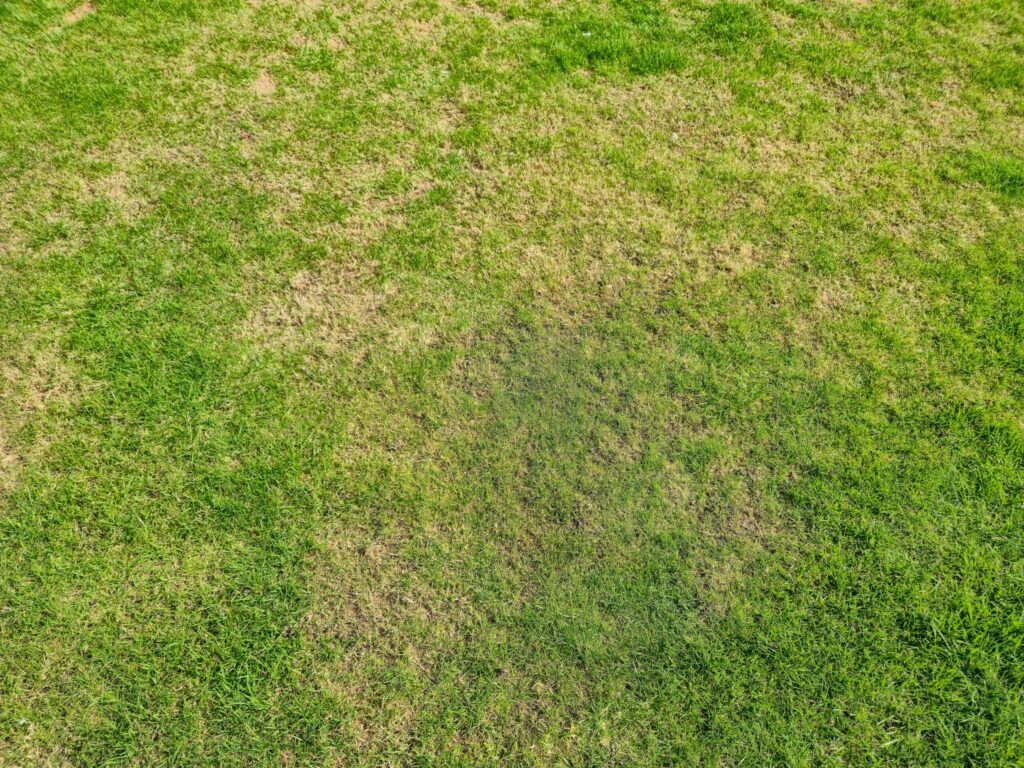
Some of the most common symptoms include:
- Brown or yellow patches in grass
- Grass that feels dry, brittle, or crunchy underfoot
- Footprints that remain visible after walking across the lawn
- Thinning turf in sunny or high-traffic areas
- Grass blades that fold, curl, or lose their normal color
- Uneven growth from one part of the yard to another
- Weeds becoming more noticeable as turf weakens
Lawn heat stress often shows up during hot, dry periods when the grass is losing moisture faster than it can replace it.
This is common in open areas that get direct afternoon sun. You may also see heat stress near concrete surfaces, since sidewalks and driveways can radiate extra heat into nearby turf.
Brown patches in grass can also appear where irrigation coverage is weak. One sprinkler head may be clogged, tilted, blocked by plants, or spraying too far in one direction.
From the street, it may look like the whole lawn is being watered properly. Up close, one section may be missing the moisture it needs.
The key is to identify the cause before changing your watering routine. If the grass is simply too dry, adjusting your watering may help. If the grass is brown because of fungus or overwatering, adding more water can make the issue worse.
Why Your Lawn May Be Turning Brown
A Florida lawn may turn brown for several reasons, and more than one factor is often involved. Heat, watering habits, mowing height, soil conditions, pests, and lawn disease can all overlap.
Here are some of the most common causes homeowners should consider.
Lawn heat stress
Florida heat can pull moisture from grass quickly, especially during long sunny stretches. When the lawn cannot take up enough water through the roots, it may start to fade, wilt, or turn brown. Sunny areas usually show stress first.
Overwatering lawn areas
It may sound surprising, but too much water can damage your lawn. Overwatering can weaken roots, reduce oxygen in the soil, and create damp conditions that may encourage fungal problems. If the soil feels constantly soggy or the grass smells musty, too much moisture may be part of the problem.
Irrigation problems
Sprinkler coverage matters just as much as watering time. A system can run on schedule and still miss certain areas. Clogged heads, broken heads, low pressure, overspray, and poor spacing can all leave dry spots behind.
Compacted soil
When soil becomes compacted, water has a harder time reaching the roots. This can make the lawn look thirsty even after irrigation or rainfall. Compacted areas are common where people walk often, where equipment is parked, or where soil has been pressed down over time.
Mowing too short
Cutting grass too low can expose the soil to more sunlight, increase evaporation, and stress the turf. In Florida, mowing height matters because grass needs enough blade surface to protect itself and support healthy growth.
Fertilizing at the wrong time
When grass looks brown, many homeowners wonder if fertilizer will green it up. But fertilizer is not always the right answer. UF/IFAS Extension St. Lucie County explains in ‘Is My Lawn Dead—and Should I Be Fertilizing Right Now?’ that timing matters, and applying fertilizer when the lawn cannot properly use it may do more harm than good.
While that article focuses on winter lawn care, the bigger lesson applies year-round: diagnose the issue before adding products.
Before you assume your lawn needs one specific fix, look at the full picture. A patch near a sprinkler head may have a different cause than one in a shady, damp area.
A lawn that turns brown after a dry week may need a different approach than one that turns brown after repeated heavy rain.
Could It Be Lawn Disease Instead?
Florida’s humidity creates ideal conditions for fungal lawn disease. Warm temperatures, excess moisture, poor airflow, and stressed turf can all increase the risk.
One common issue in Florida lawns is large patch disease. UF/IFAS Gardening Solutions explains that Large Patch in Florida Lawns affects warm-season turfgrasses and can be especially problematic in St. Augustine grass and zoysiagrass.
This matters because St. Augustine grass is common in many Florida yards. When it develops brown patches, homeowners often assume the lawn is drying out. But fungal problems can sometimes look similar to drought stress, especially from a distance.
Signs that may point toward fungal disease include:
- Circular or irregular brown patches
- Yellow, orange, or reddish-brown edges around damaged areas
- Patches that spread outward over time
- Grass that pulls up easily in affected areas
- Damage that appears after humid, wet, or overwatered conditions
If a fungal issue is present, adding extra water may make conditions more favorable for disease. That is why identifying the cause matters.
A lawn that is too dry and a lawn with fungus may both look brown, but they need very different responses.
You do not need to become a turf disease expert to care for your yard, but you should know when something looks unusual.
If brown areas are spreading, forming circles, or appearing after periods of high moisture, it may be time to have the lawn looked at before making more changes.
What You Can Check Before Watering More
Before watering more, take a few minutes to inspect your lawn. These simple checks can help you narrow down what may be happening.
Check the soil moisture
Push a screwdriver or small garden tool into the soil. If it slides in easily and the soil feels moist, the lawn may not need more water. If the soil is hard, dry, and difficult to penetrate, the grass may not be getting enough moisture.
Look at sprinkler coverage
Run your irrigation system and watch each zone instead of assuming it’s working properly because water is coming out. Look for dry corners, overspray onto driveways, weak pressure, blocked heads, or areas where water is pooling.
Compare sunny and shaded areas
If the brown patches are mostly in sunny areas, lawn heat stress may be part of the issue. If the problem is worse in shaded, damp areas, disease or excess moisture may be more likely.
Watch how water moves
If water runs off quickly instead of soaking in, the soil may be compacted or the irrigation may be applying water too fast. Runoff wastes water and leaves roots without the moisture they need.
Pay attention to timing
Did the brown patches appear after a heat wave, heavy rainfall, a mowing change, or an irrigation repair? The timing can help identify the cause.
Look for patterns
Straight lines, corners, strips, or perfectly shaped dry areas often suggest irrigation problems, while circular or spreading patches are more commonly associated with disease. High-traffic areas may point to compaction or wear.
Good Florida lawn care starts with observation. The more you understand what your lawn is showing you, the easier it is to make smart decisions.
Simple Ways to Help Your Lawn Recover
Once you have a better idea of what may be causing the problem, focus on simple habits that reduce stress and support recovery.
Try not to make too many changes at once. If you water more, change mowing height, fertilize, and treat for disease all in the same week, it becomes harder to know what actually helped.
Start with the basics.
Water deeply and consistently
When watering is needed, deeper watering is usually better than frequent light watering. Shallow watering encourages shallow roots, which makes grass more vulnerable during hot weather. Always follow local watering rules and adjust based on rainfall.
Fix irrigation issues
If sprinkler coverage is uneven, watering longer will not always solve the problem. Repair broken heads, adjust spray patterns, and make sure each zone is reaching the lawn evenly.
Mow at the proper height
Avoid scalping the lawn. Taller grass can help shade the soil, reduce moisture loss, and support stronger root growth. Sharp mower blades also matter because clean cuts are less stressful than torn grass blades.
Avoid heavy fertilizing during stress
If the lawn is already struggling, fertilizer may not be the first solution. The right timing depends on the season, grass condition, and local guidance. When in doubt, identify the cause first.
Reduce unnecessary traffic
If one part of the lawn is thinning, try to limit repeated walking, parking, or equipment use in that area until it improves.
Monitor changes over time
Grass recovery is not always instant. After correcting a watering or irrigation issue, watch the lawn for gradual improvement. Look for better color, stronger growth, and fewer spreading patches.
A healthy lawn is built through consistent yard maintenance, not panic fixes. Small, steady improvements often work better than rushing into multiple treatments.
Watering Is Only One Part of a Healthy Florida Lawn
If your lawn is turning brown even though you are watering it, do not assume you are doing something wrong. Florida lawns face a tough mix of heat, humidity, rainfall swings, sandy soil, and pest or disease pressure. Brown grass can be frustrating, but it is also a clue.
The best first step is to look closely. Check the soil. Watch the sprinklers run. Notice whether the brown patches are in sunny, shaded, wet, dry, or high-traffic areas.
These details can help you figure out whether the issue is lawn heat stress, overwatering, irrigation problems, fungal disease, or another common lawn care concern.
Watering is important, but it is only one piece of maintaining a healthy lawn in Florida. The right solution depends on the cause. When you catch changes early and address problems before they spread, your lawn has a much better chance of recovering.
If your lawn is turning brown and you’re not sure why, our staff here at Florida Sunshine Lawn Care is here to help. Our team can identify the cause, recommend the right solution, and help keep your lawn healthy through every Florida season. Contact us today to schedule a lawn evaluation.
FAQs
Q: Why is my lawn turning brown even though I’m watering it?
A: Brown grass is not always caused by a lack of water. Heat stress, overwatering, lawn disease, irrigation issues, and poor soil conditions can all cause your lawn to turn brown or lose its healthy green color.
Q: Can overwatering make my lawn turn brown?
A: Yes. Overwatering can weaken root systems, encourage fungal diseases, and create poor soil conditions that lead to brown patches. If the soil stays soggy or the lawn develops spreading patches, too much moisture may be part of the problem.
Q: Why does St. Augustine grass develop brown patches?
A: St. Augustine grass can develop brown patches from heat stress, fungal diseases, improper watering, or uneven irrigation. Identifying the cause is important before treating the lawn or changing your watering routine.
Q: When should I call a lawn care professional?
A: If your lawn continues turning brown despite proper watering, or the affected areas continue spreading, a lawn care professional can help diagnose the underlying issue and recommend the best solution.