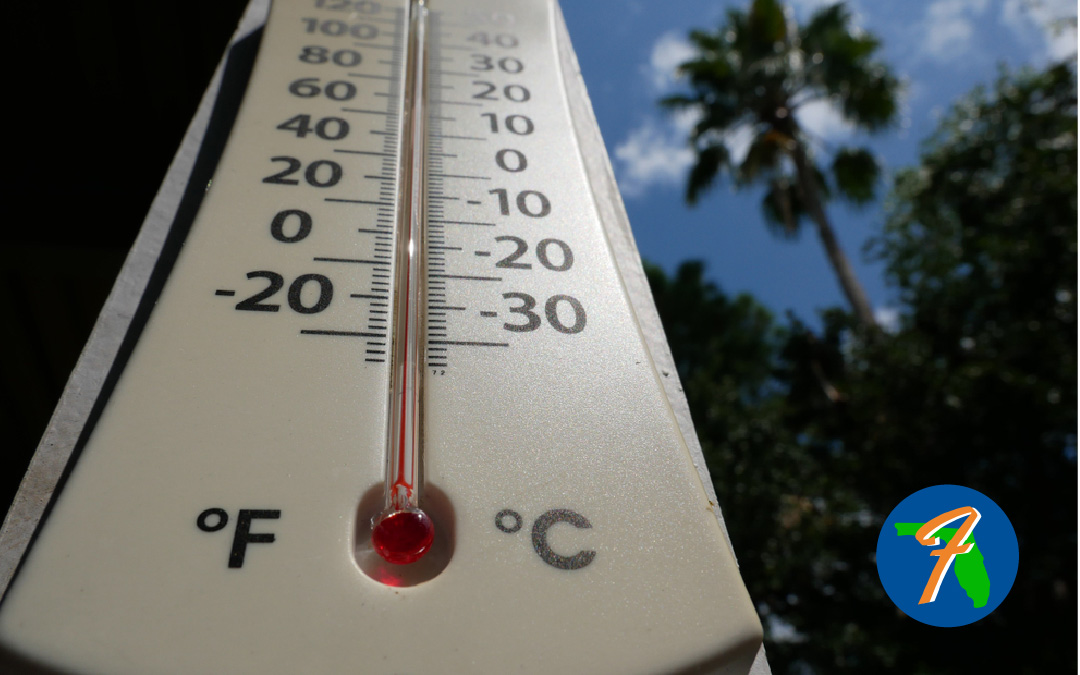
Florida is doing what Florida does best right now– turning up the heat.
With another heat wave rolling across the state, it’s hard not to think about how it’s going to affect your lawn, especially if your grass already looks a little tired by the middle of the afternoon.
A Florida heat wave can feel normal because, well, this is Florida. Hot days, sticky air, bright sun, and afternoon storms are all part of life here.
But extreme heat can still catch homeowners off guard. One week your yard looks green and full, and the next you may notice thin areas, brown patches, footprints that won’t disappear, or grass that seems to be losing its color faster than usual.
In this article, we’ll break down what’s happening with the heat wave in Florida, why your lawn may be reacting to it, how watering should be handled carefully, and what simple lawn care basics can help reduce stress during the hottest part of the summer.
What’s Going On With This Florida Heat Wave?
Florida summers are already known for high temperatures, heavy humidity, and intense sun. During a heat wave, those conditions become more concentrated.
Temperatures may climb into the 90s, but with the humidity, it can feel much hotter. That “feels-like” temperature matters because people, pets, plants, and lawns all have a harder time recovering when the air stays hot and heavy for long stretches.
Heat waves are not new here. A published study looks at Florida heat wave patterns and how they connect with precipitation events.
For homeowners, it usually shows up in a very practical way: the lawn is often one of the first parts of the property to show stress.
During a Florida heat wave, homeowners may notice:
- Grass looking dull, faded, or less vibrant than usual
- Dry patches forming in sunny or high-traffic areas
- Soil drying out faster between watering days
- Irrigation problems becoming more obvious
- Weeds standing out as turfgrass becomes stressed
- Outdoor work feeling harder and less comfortable during the hottest parts of the day
That makes sense. Grass sits directly under the sun all day. It depends on healthy roots, enough moisture, and decent soil conditions to keep growing.
When heat builds, the lawn has to work harder to stay upright and green. If rainfall is limited or your irrigation coverage is uneven, the weak spots usually show first.
There is also a bigger weather pattern to keep in mind. Florida homeowners are dealing with more than just hot afternoons.
Reports like Climate Central’s alert on early-season heat in Florida made five times more likely by climate change point to how climate shift concerns are becoming part of the conversation around extreme heat.
Whether you’ve noticed it in the data or simply in your own yard the takeaway is the same, the takeaway is the same: lawn care in Florida has to respond to changing weather patterns.
Signs Your Lawn Is Feeling the Heat
Heat stress can sneak up quickly during an extreme heat wave.
At first, the grass may not look “dead.” It may simply look dull, tired, or flat. That rich green color starts fading, and the lawn can take on a grayish-green or slightly bluish look in certain areas.
Another common sign is brown or dry patches. These often appear in areas that get the most direct sunlight, such as along driveways, near sidewalks, in open front yards, or on slopes where water runs off instead of soaking in.
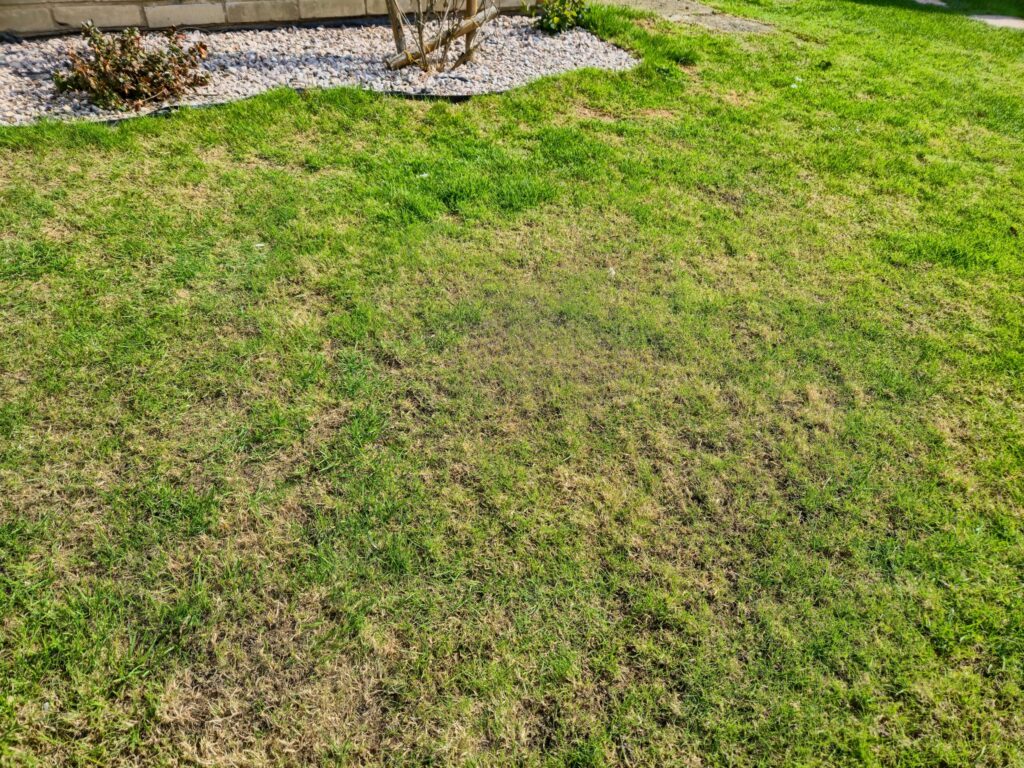
Spots with compacted soil may dry out faster too, even if the rest of the yard looks fine.
One of the easiest tests is the footprint test. Walk across the lawn and look behind you. If your footprints remain visible instead of the grass blades bouncing back up, your lawn is likely under stress.
Healthy grass has more spring to it. Stressed grass stays flattened because it doesn’t have enough internal moisture to recover quickly.
Other signs to watch for include:
- Grass blades curling or folding inward
- Edges of the lawn drying faster than the middle
- Thin areas becoming more noticeable
- Weeds standing out because turf is weakening
- Irrigation zones that look uneven after watering
The key is to catch lawn stress early. Once grass becomes severely dry or damaged, it can take much longer to recover, especially if the heat continues.
Heat Wave This Week? Here’s What Homeowners Usually Do First
When homeowners hear “heat wave this week,” the first instinct is usually simple: turn on the sprinklers and water your lawns more.
It’s easy to see why. Grass needs moisture, and watering becomes a top priority when the sun is intense.
But more water is not always the same as better care. In fact, watering too often for short periods can create shallow roots.
Shallow roots make grass more vulnerable when the next stretch of extreme heat arrives.
The better approach is usually deep, consistent watering that encourages the roots to grow down into the soil.
Think of it this way: a quick sprinkle may make the lawn look refreshed for a moment, but it may not reach the root zone where the grass actually needs it.
A deeper watering session, done at the right time and within local guidelines, is often more useful than several light passes.
For watering lawn in hot weather, homeowners should focus on a few practical habits:
- Water early enough that moisture can soak in before the strongest heat of the day.
- Avoid watering during windy periods, when water may blow onto sidewalks or streets.
- Watch for runoff, which means the soil is not absorbing water fast enough.
- Check each irrigation zone to make sure coverage is even.
- Do not keep watering a soggy area just because another part of the lawn is dry.
That last point matters. Many Florida lawns do not dry out evenly.
One zone may get full sun all day while another sits near shade. One sprinkler head may be slightly clogged or angled wrong. One corner may drain poorly.
It’s not just about running your sprinklers longer. It is about whether the right amount of water is reaching the right areas.
Watering Rules and Local Restrictions
Before adjusting your watering schedule, check your local rules. Water restrictions in Florida can vary by city, county, and water management district.
The rules may also change during drought, water shortage conditions, or periods of heavy rainfall.
It’s also worth noting that when you newly or freshly sod your lawn, most Florida counties allow you to water it more frequently until the sod takes root.
Cape Coral is a good example of why checking official guidance matters.
The city publishes Cape Coral watering schedule and water conservation information, including schedules based on address numbers and special restrictions in certain areas.
(Our branch in Cape Coral also put out a specific guide for homeowners in the area here. It cover what residents need to know.)
In some cases, a property may follow the regular year-round irrigation schedule. In other cases, emergency water shortage rules may limit irrigation more tightly.
That is why searching “water restrictions Florida” will not always give you the exact answer for your home.
A Cape Coral property, a Fort Myers property, and a property in another part of the state may not follow the same rules.
Even nearby neighborhoods can sometimes have different water guidelines depending on the water source or current restrictions.
During the hottest parts of the summer, it is tempting to water whenever the lawn looks dry. But homeowners should balance lawn health with local regulations.
If you are not sure what applies to your address, check your city, county, or water district website before making changes. You can still care for your lawn responsibly; you just need to work within the allowed schedule.
Heat Waves Aren’t the Only Thing Affecting Florida Lawns
Heat is only part of the challenge for Florida lawns during the summer. The same season that brings extreme heat can also bring heavy rain, thunderstorms, tropical moisture, and flash flood concerns.
That mix can be tough on lawns because grass may go from dry stress to oversaturated soil in a short amount of time.
Recent South Florida weather coverage noted that extreme heat continues in South Florida while severe thunderstorm and flash flood risks rise.
For homeowners, that combination can be frustrating. The lawn may look thirsty one day, then get hit with heavy downpours the next.
Too little water stresses your lawn, but too much can be just as harmful. Saturated soil can limit oxygen around the roots, encourage shallow rooting, and leave low spots messy or muddy.
If rain comes down too quickly, it may run off instead of soaking in, especially on compacted soil or sloped areas.
That is why Florida lawn care depends on multiple weather factors, not just the thermometer.
Heat, humidity, rainfall, drainage, soil condition, mowing height, and irrigation coverage all work together. When one part is off, the lawn may start showing it.
Extreme weather events can also make timing harder. A homeowner may plan to water, then storms arrive.
Or a heavy storm may seem like enough rain, but one section of the yard still misses out because tree coverage, runoff, or soil compaction keeps water from reaching the root zone.
Don’t rely on the calendar alone. Pay attention to how your lawn is actually responding. The best approach is to observe the lawn closely instead of relying only on the calendar.
8 Simple Ways to Help Your Lawn Through Extreme Heat
- You don’t need to overhaul your entire yard maintenance routine every time an extreme heat wave moves through Florida.
- In most cases, the goal is to reduce stress and avoid doing anything that makes the lawn work harder than it already is.
- Start with mowing height. During hot periods, raising the mowing height can help shade the soil and protect the lower part of the grass blade.
- Cutting too short removes valuable leaf tissue and exposes more soil to direct sun. That can increase evaporation and make the lawn dry out faster.
- Next, avoid heavy fertilizing during peak heat unless you have a specific professional recommendation.
- Fertilizer can push new growth, and new growth needs moisture. When grass is already fighting heat and limited rainfall, forcing growth at the wrong time may add stress instead of helping.
- Irrigation coverage is another big one. Many homeowners think they have a watering problem when they really have a coverage problem.
- A sprinkler head may be blocked by overgrown plants. A nozzle may be spraying the driveway. One zone may have low pressure. Another may be missing a dry corner completely.
During a Florida heat wave, those small issues become much more obvious.
Here are a few practical lawn care tips to keep in mind:
- Raise the mower slightly during extended heat.
- Keep mower blades sharp so they cut cleanly instead of tearing grass.
- Check sprinkler heads for clogs, leaks, overspray, or poor coverage.
- Water according to local rules and avoid frequent shallow watering.
- Watch for early signs of lawn heat stress before damage spreads.
- Avoid major lawn projects during the hottest stretch of the day.
- Clear debris that may trap heat or block airflow over the grass.
Also, be careful with foot traffic. When grass is already stressed, repeated walking, kids playing in the same worn path, or parked equipment can make thinning worse. If one area is struggling, give it a break when possible.
Small adjustments can make a real difference. The goal is not perfection during extreme heat. The goal is to help the lawn hold steady until better growing conditions return.
We Can Help Your Lawn Through Florida’s Extreme Heat
Florida heat waves are a normal part of the climate, but that doesn’t mean they are easy on your lawn.
Long stretches of high heat can affect color, growth, moisture needs, and the way your grass responds to everyday maintenance.
The good news is that homeowners can do a lot by paying attention early. If your lawn looks dull, footprints remain visible, or dry patches are spreading, those are signs that your grass may need a more careful approach.
Checking irrigation coverage, following local water guidelines, raising mowing height, and avoiding unnecessary stress can all help your yard get through the hottest periods of summer.
Does that sound like a lot? Well, it can be… and the good news is, we can help.
If your lawn is struggling through the heat, give our team a call. We’re happy to help you figure out what’s going on and what to do next.
We’ll talk to you soon.
FAQs
Q: How often should I water during a Florida heat wave?
A: It depends on your local conditions, your grass type, rainfall, irrigation coverage, and local water guidelines. In general, deeper, consistent watering is more effective than frequent light watering.
Q: Can heat alone damage my lawn?
A: Prolonged heat can stress grass, especially when it is combined with limited rainfall, poor irrigation coverage, compacted soil, or mowing too short.
Q: Should I change my mowing routine during extreme heat?
A: Yes. Raising the mowing height can help shade the soil, reduce evaporation, and protect grass during hot periods. Avoid cutting too much at once when the lawn is already stressed.
Q: What are signs my lawn is overheating?
A: Dull color, visible footprints, curling grass blades, and uneven dry patches are common early signs of lawn heat stress.
If your lawn is showing signs of heat stress during this Florida heat wave, Florida Sunshine Lawn Care can help you keep your yard looking its best through the hottest months.